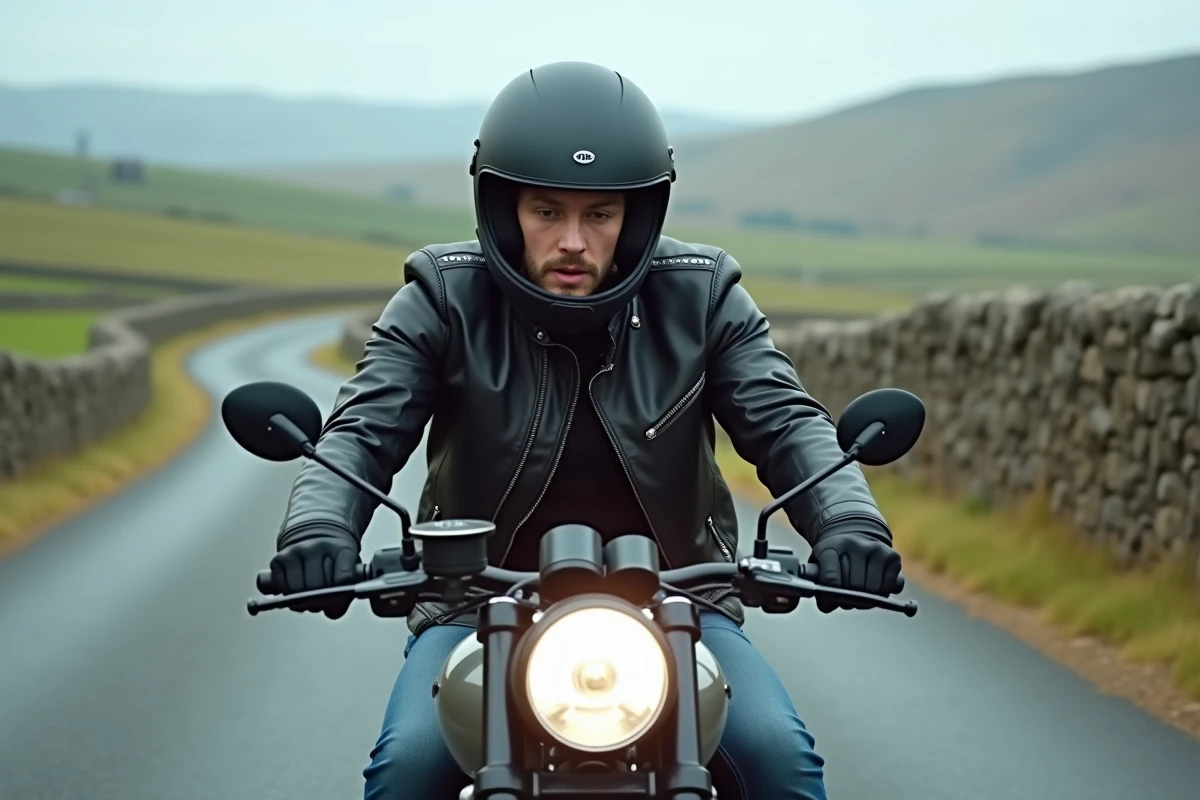
A thirty-minute commute on a main road and a weekend on mountain roads do not require the same motorcycle at all. Before comparing models or engines, it’s more efficient to start from your actual constraints: daily distance, type of roads taken, rider size, usual weather conditions. It’s this terrain filter that avoids casting errors, much more than the technical specifications read online.
A2 Compliance and Registration Document: The Trap That Costs Insurance
We regularly encounter riders who are riding a “theoretically” restricted machine without checking that the MTT1 code is indeed on the registration document. The problem only becomes apparent at the time of an accident: the insurer refuses compensation if the exact compliance of the model with the A2 license is not proven by this code.
The power-to-weight ratio allowed for A2 is capped at 0.2 kW/kg. Before purchasing, check three points on the registration certificate: the mention of the restriction, the category code, and the consistency with the net power listed. A private seller who “had it restricted by a friend” without going through an authorized center is a model to avoid, regardless of the price.
To learn everything about Mister Bike motorcycles and access detailed sheets by category, there is a catalog that specifies the compliance of each model, which simplifies verification.
Electric Motorcycles Equivalent to 125 cm³: A City Option Not to Dismiss
Beginner guides remain largely focused on internal combustion engines. The electric motorcycles equivalent to 125 cm³ accessible with the A1 license (or the seven-hour training for B license holders) deserve attention, especially for daily urban use.
The cost of use decreases in two areas: electricity is significantly cheaper than gasoline, and maintenance is limited (no oil changes, no chain to lubricate, brake pads used less often thanks to regenerative braking). Manufacturers like Zero Motorcycles or Super Soco offer models designed for the city, with sufficient range for home-to-office trips.
Feedback varies on this point, but range on the road remains the main drawback. For mixed city-main road use, it’s better to test the model on your actual route before signing. A test in a parking lot doesn’t indicate consumption under normal conditions.
Young Rider Motorcycle Insurance: The Model Weighs as Much as the Profile
It is often thought that the insurance premium mainly depends on age and the length of time holding the license. In practice, the look and category of the model play at least as significant a role. Recent comparisons for A2 licenses indicate a clear penalty for sportier-looking motorcycles, even when they comply with legal power limits.
Specifically, two motorcycles of identical power but different categories (naked versus fully-faired sport) can generate a significant difference in premium. Insurers base their rates on accident statistics by model family, not just on engine size.
Criteria That Lower the Premium
- Choosing a naked bike or a trail rather than a sport bike, at equal power, reduces the premium with most insurers.
- Parking in a closed garage or private box, even if rented, lowers the theft risk, the primary cause of motorcycle claims in urban areas.
- Completing a voluntary post-license training course may provide access to a discount with certain insurers, provided you present the certificate.
Requesting multiple quotes specifying the exact model (not just “500 cc motorcycle”) allows for realistic estimates. A difference of a few dozen euros per month over three years changes the total project budget.
Motorcycle Maintenance: Areas to Monitor from the First Months
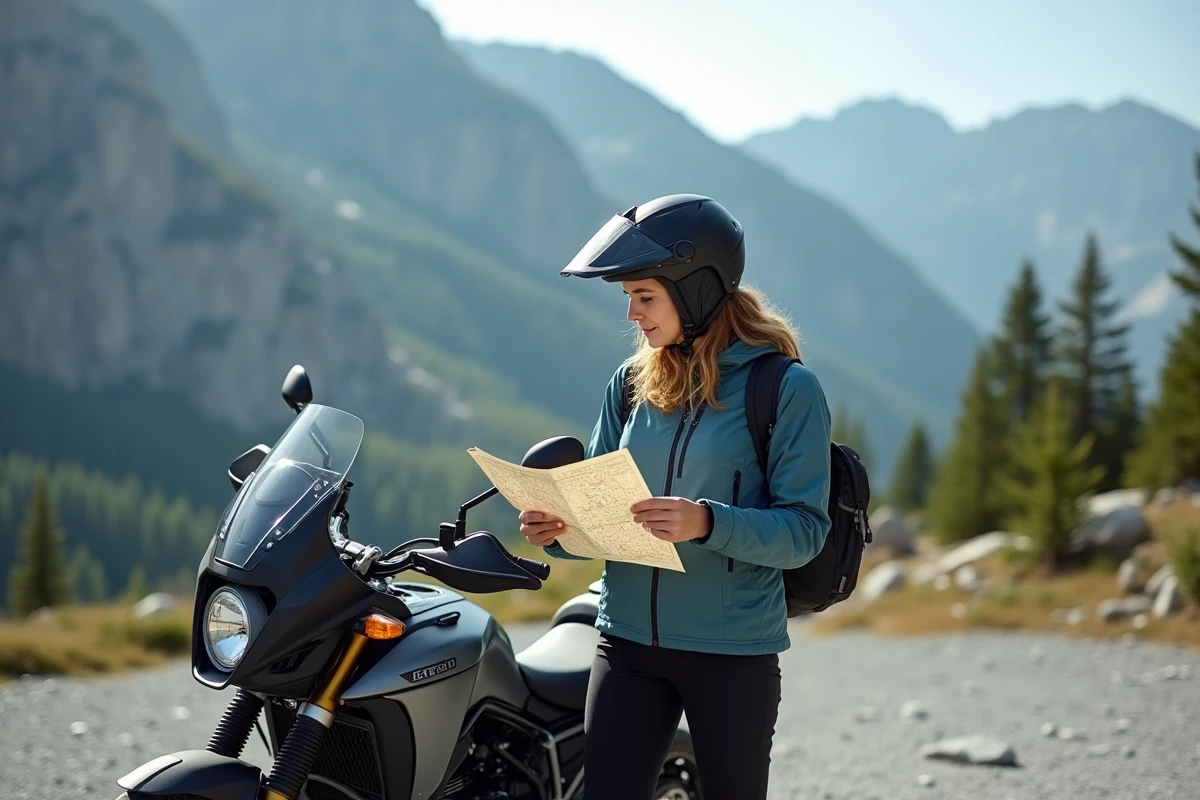
Maintaining a motorcycle is not limited to the annual service. Certain components wear out quickly when riding every day, and neglecting them can end up costing more than regular interventions.
Tires, Chain, and Brakes: The Trio to Check Yourself
Tire pressure should be checked every two weeks, when cold. An under-inflated tire alters handling in turns and accelerates uneven wear of the tread. Don’t wait for the service to take care of it.
The chain tension should be checked every few hundred kilometers on a new motorcycle, a bit less often afterward. A link that is too tight wears out the output sprocket, while a link that is too loose can jump off. Lubrication should be done after every ride in the rain, or once a week for daily use.
Brake pads should be visually inspected: a wear indicator is engraved in the lining. When the groove disappears, it’s time to replace them. Riding with worn pads damages the disc, and the bill can triple.
Pre-ride Checklist
- Quick visual check: tires (pressure, cuts), levels (oil, brake fluid, coolant if applicable).
- Test controls while stationary: front brake, rear brake, clutch, switches (indicators, lights).
- Check lighting: low beam, high beam, brake light, indicators. A burnt-out light in winter poses a direct collision risk.
- Condition of the side stand: the safety switch must cut the engine when the stand is down with a gear engaged.
This check takes less than two minutes. You eventually do it automatically, and it prevents most avoidable breakdowns on the roadside.
The choice of a motorcycle relies on a balance between actual use, overall budget (purchase, insurance, maintenance), and administrative compliance. Checking the registration document, comparing premiums on the exact model, and adopting a control routine from day one protects better than a surplus of engine size or options.