When preparing a costume for a themed party or looking to integrate a vintage piece into one’s wardrobe, the 1920s present a concrete problem: the silhouette of this decade is unlike anything that existed before. Straight cuts, low waistlines, flowing fabrics—all oppose the corsets and voluminous petticoats of the Belle Époque. Understanding 1920s fashion begins with the technical constraints that shaped these garments.
Fabrics and Cuts of the 1920s: What Changes in Garment Construction
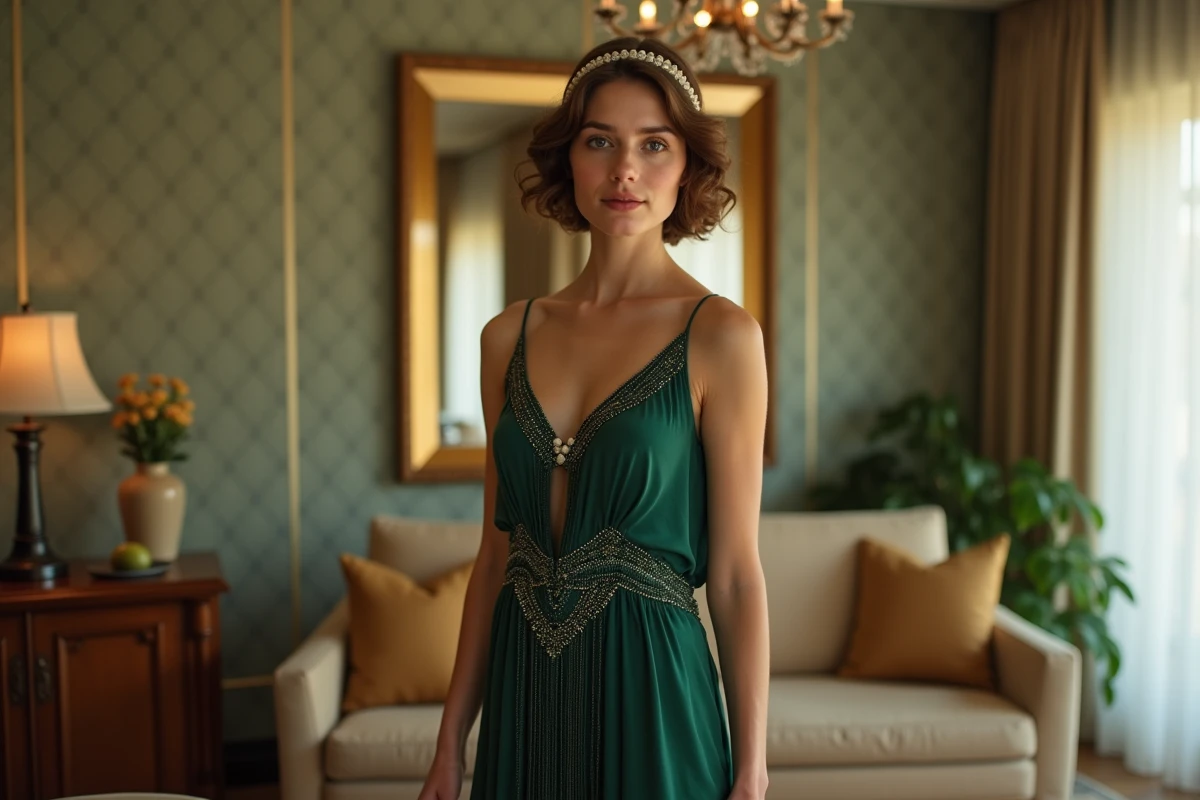
Before 1920, a women’s dress was constructed on a rigid framework. The corset dictated the shape, and the fabric followed. The Roaring Twenties reversed this logic: the fabric becomes the structure of the garment. We move to silk crepes, jerseys, and muslins that fall freely over the body.
The straight cut, without darts at the waist, simplifies the making process. To achieve the characteristic tube silhouette of the time, the waist drops to the hip level. This detail changes the entire pattern of the garment.
Embroidery and embellishments (beads, fringes, sequins) are not just decorative. They add weight to the bottom of the dress to accentuate movement while dancing, particularly the Charleston. This approach can be seen in evening dresses dated between 1925 and 1928, where beaded fringes could represent a significant portion of the total weight of the garment.
Boyish Silhouette: A Women’s Wardrobe Designed for Movement
The boyish style is not just an aesthetic choice. It responds to a practical need: women in the 1920s dance, drive, and work. The clothing must keep up. To better understand the codes of this decade, a look back at 1920s fashion allows us to grasp the extent of the change.
Specifically, the typical wardrobe includes:
- Straight dresses with low waistlines, often sleeveless or with short sleeves, freeing the arms and shoulders for movement
- Shortened skirts (sometimes above the knee), a length that would have been unthinkable a decade earlier
- Fitted cloche hats, worn low on the forehead, designed to accompany short hairstyles (bob or Eton crop)
- Strap shoes (Mary Jane or T-strap) with a moderate heel, designed for dancing without slipping
This wardrobe reflects a change in the relationship with the female body. Curves are no longer emphasized. The androgynous silhouette becomes a claimed fashion choice, not a fashion accident.
Paul Poiret, Coco Chanel, and Jean Patou: Three Approaches to Roaring Twenties Style
These three names are often mentioned together, but their contributions are very different. Paul Poiret had already begun to liberate the silhouette before the war by eliminating the corset in the 1910s. His creations from the 1920s remain sumptuous, Orientalist, laden with embroidery and bright colors. It is a spectacular style, designed for Parisian soirées.
Coco Chanel takes the opposite approach. Her pieces are functional: jersey, clean lines, neutral colors. She democratizes black as a daytime color and establishes the little black dress as a classic. The idea is not to decorate the body but to leave it alone.
Jean Patou, on the other hand, focuses on sportswear and elegant athletic clothing. His swimsuits, tennis outfits, and geometric-patterned sweaters contribute to the idea that fashion should accompany an active life. Opinions vary on the respective influence of Patou and Chanel, but their complementarity defined the ready-to-wear of the decade.
Art Deco and 1920s Fashion: Geometric Patterns and the Influence of Decorative Arts
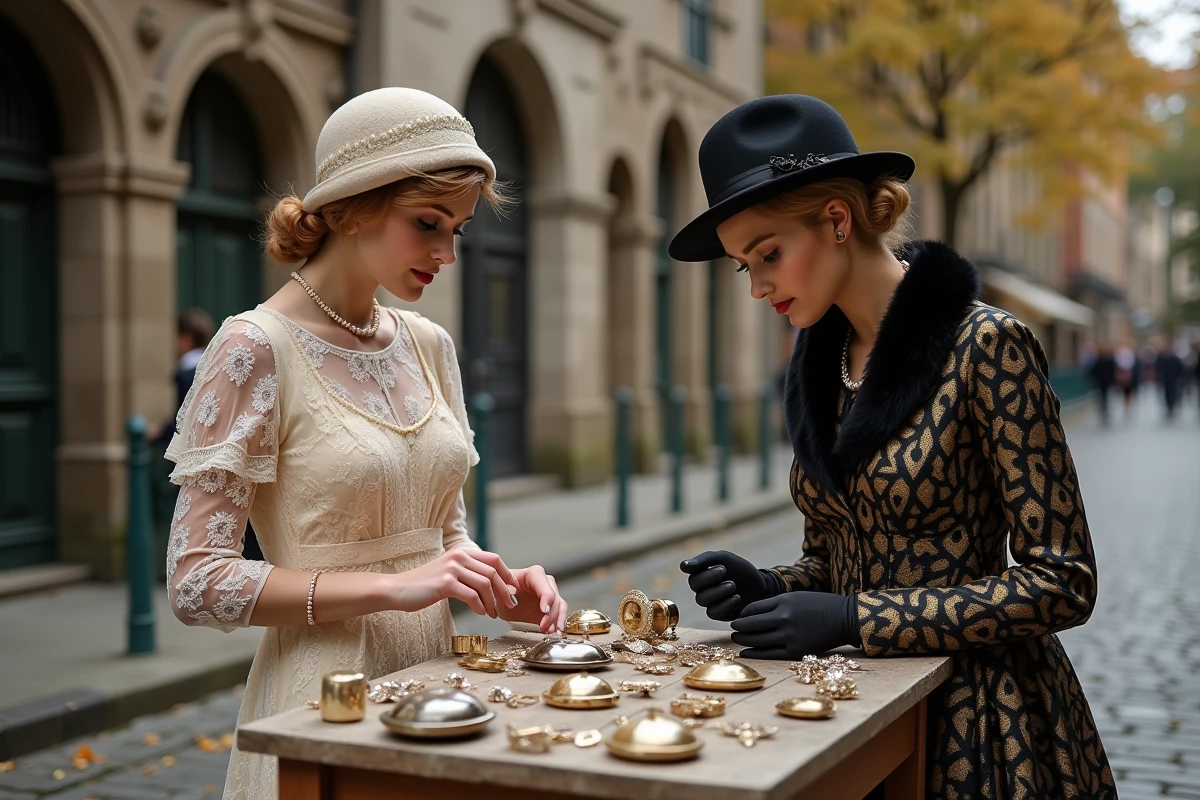
The Art Deco movement, which reached its peak during the International Exhibition of Decorative Arts in Paris in 1925, directly influences the clothing creations of the time. Geometric patterns transition from architecture to textiles.
Zigzags, stylized fans, stair-step shapes: these designs appear on evening dresses, scarves, and handbags. Jewelry adopts the same codes, with angular lines in platinum, onyx, and baguette-cut diamonds.
This convergence between decorative arts and fashion creates a total style. A woman dressed for an evening in 1926 carries the same visual vocabulary as the building she enters, the furniture she sits on, and the poster that decorates the wall. This dialogue between disciplines is a strong feature of 1920s style, explaining why this era remains so visually recognizable.
Concrete Legacy of the Roaring Twenties in Contemporary Fashion
References to the 1920s are not just nostalgic. Chanel Métiers d’Art 2023 has revived the straight cuts and geometric embroidery of late 1920s evening dresses, this time pairing them with flat ballet shoes. Comfort replaces the heel, but the silhouette remains true.
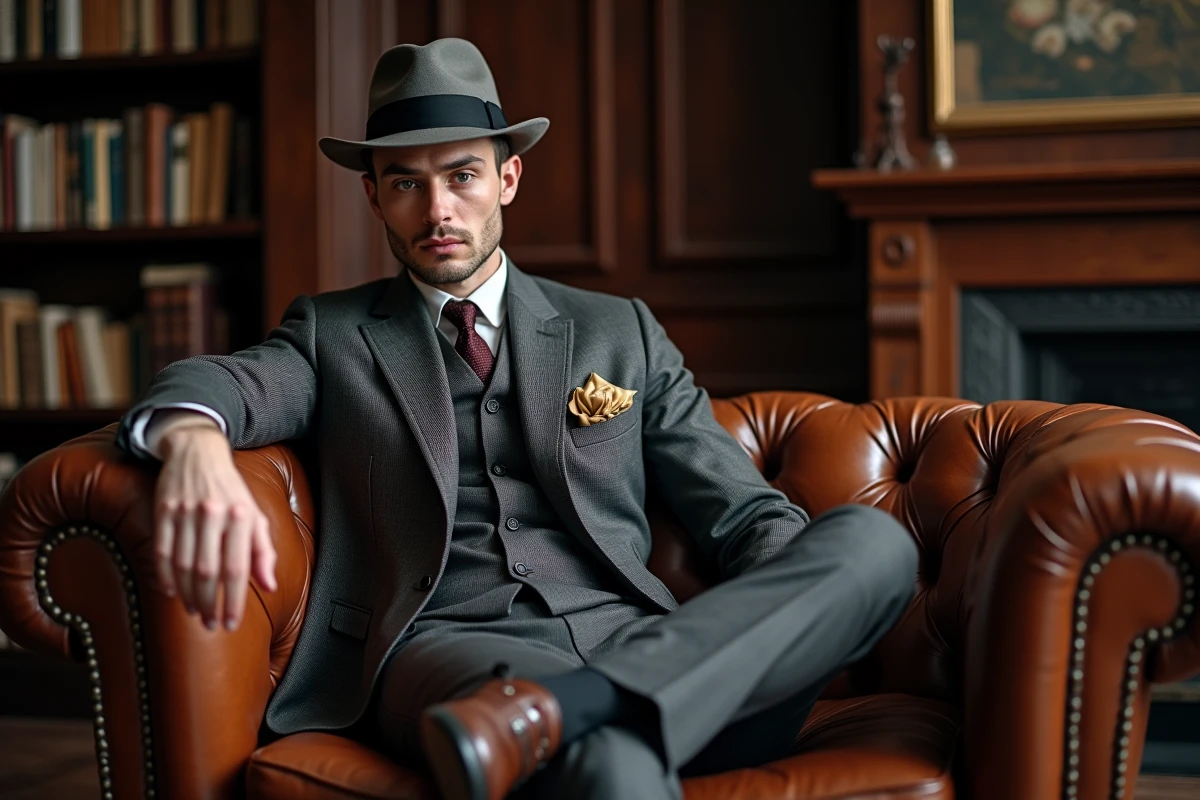
In the realm of gender-neutral fashion, designers like Palomo Spain and Ernest W. Baker draw from the fluid menswear of the 1920s (soft suits, light colors, wide trousers) for their explicitly genderless collections. Stylist Harry Lambert cites this decade as a moment when the clothing boundaries between men and women were relaxed for the first time.
Fringes, sequins, and low-waisted cuts also appear in festive collections every year-end. The Charleston dress remains a classic for costume parties, but its codes (fluidity, embellishments, freedom of movement) also influence contemporary ready-to-wear well beyond disguise.
1920s fashion established a principle that has never really been challenged: a garment must adapt to the moving body, not the other way around. Perhaps this is why this decade continues to inspire, a century later.