
On an aerospace maintenance site, a qualified welder negotiates her starting salary. Her employer must now display the salary range for the position even before the interview. This type of scene, still rare a few years ago, illustrates a concrete shift in the way female-dominated professions are perceived and compensated in France.
Salary Transparency and Feminized Professions: What the 2026 Bill Changes
The salary transparency bill presented in September 2026 is not limited to symbolic displays. It introduces a mechanism for comparing salaries based on the concept of equal value work, rather than solely on the profession or socio-professional category. The criteria considered include skills, responsibilities, working conditions, and physical or mental workload.
For heavily feminized sectors (personal care, education, health), this approach can reshuffle the cards. A nursing assistant whose job requires a physical workload comparable to that of a logistics technician will have her compensation evaluated on the same scale. One can read the article on RapidActu to gauge the extent of this expected change in image by the end of the year.
Government data indicates that in 2024, the average salary gap in the private sector reached 21.8%, but narrowed to 3.6% for comparable positions and working hours. Transparency makes these gaps visible from the recruitment stage, which alters the perception of potential candidates and employers.

Orientation Stereotypes: The Ongoing Barrier for Girls
One does not transform the image of a sector solely through legislation. The digital sector, cybersecurity, and industry are hiring massively, yet women remain underrepresented.
The issue lies well before employment, starting from school orientation. Girls who achieve excellent results in science still predominantly steer towards literary or paramedical fields. It’s not a question of competence; it’s a question of projection: without a visible model, the profession remains a blind spot in the professional imagination.
Direct Contact with the Profession as a Lever
Feedback varies by region and sector, but the trend is the same: direct contact with the profession reduces self-censorship more effectively than any communication campaign.
Residual Salary Gap: Why Feminization Alone Is Not Enough
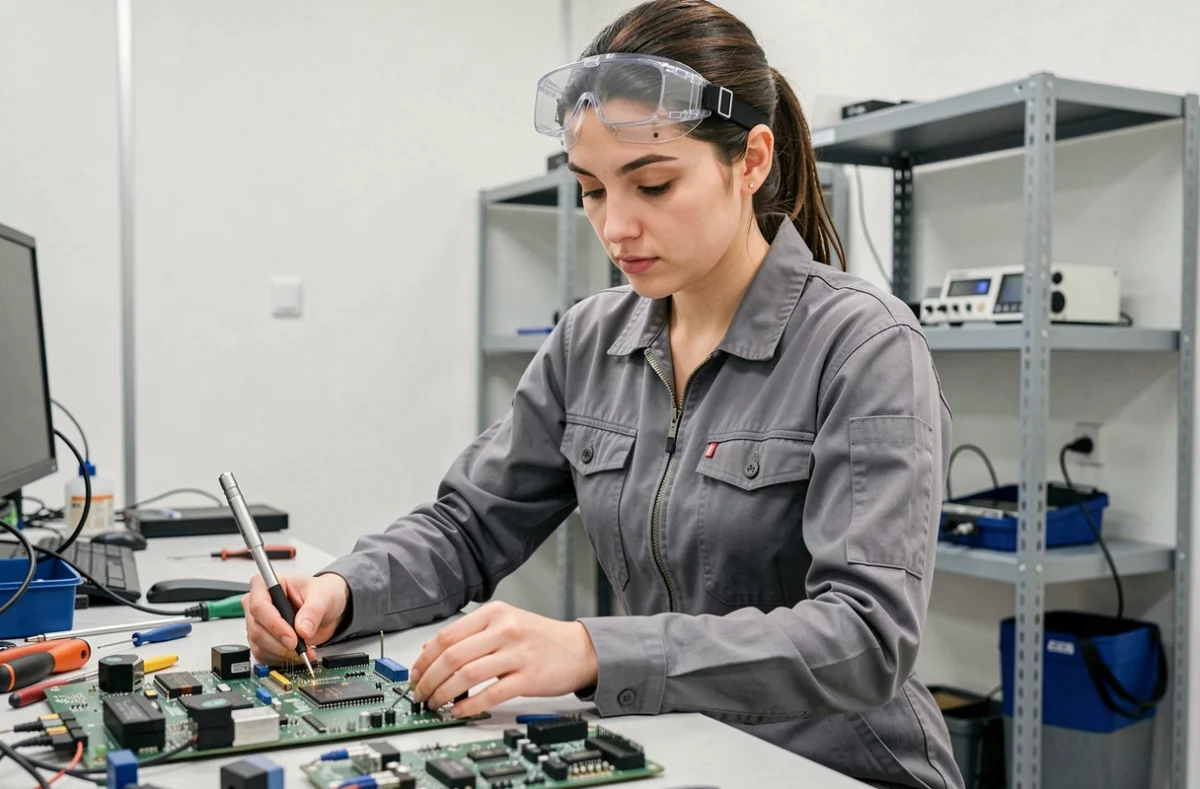
Feminizing a sector without correcting internal progression mechanisms does not significantly change its image. In metallurgy, the proportion of women has stagnated below 30% for a decade. The sector is actively recruiting in welding, boilermaking, and maintenance, professions where candidates are in a strong position in the labor market.
The problem is not just attracting women at the entry level. It is ensuring that they access positions of responsibility at the same rate as men. Legal obligations for gender diversity in governing bodies help to force a catch-up that the market alone was not producing.
What Traditional Classifications Undervalue
Job classification grids inherited from the last century value certain criteria (raw physical effort, mechanical technicality) while downplaying other requirements (emotional load, multitasking coordination, continuous vigilance). These classification biases explain part of the salary gap in care, education, or reception professions.
The shift to an evaluation based on “equal value work” will not correct everything overnight. Professional sectors will need to renegotiate their grids, a process that takes time. But the signal sent is clear: so-called female professions deserve a technical reevaluation of their content.
Employer Branding and Gender Equality in France: A Recruitment Criterion
Companies that publish clear data on salary equality and the gender mix of their executive teams see a tangible advantage in recruitment. It is no longer just a communication argument; it is a filter used by candidates when comparing job offers.
- Transparency on salary ranges from the job offer reduces negotiation time and attracts more female applications in high-demand sectors.
- Companies in the digital and industrial sectors that display equal parental policies tap into a talent pool that their competitors overlook.
The image of female professions will not change by decree. It will shift when salaries, career prospects, and working conditions are clear, comparable, and aligned with the reality of the skills involved. The regulatory tools of 2026 set a framework. The rest depends on what each employer, each sector, and each educational institution does with it concretely.