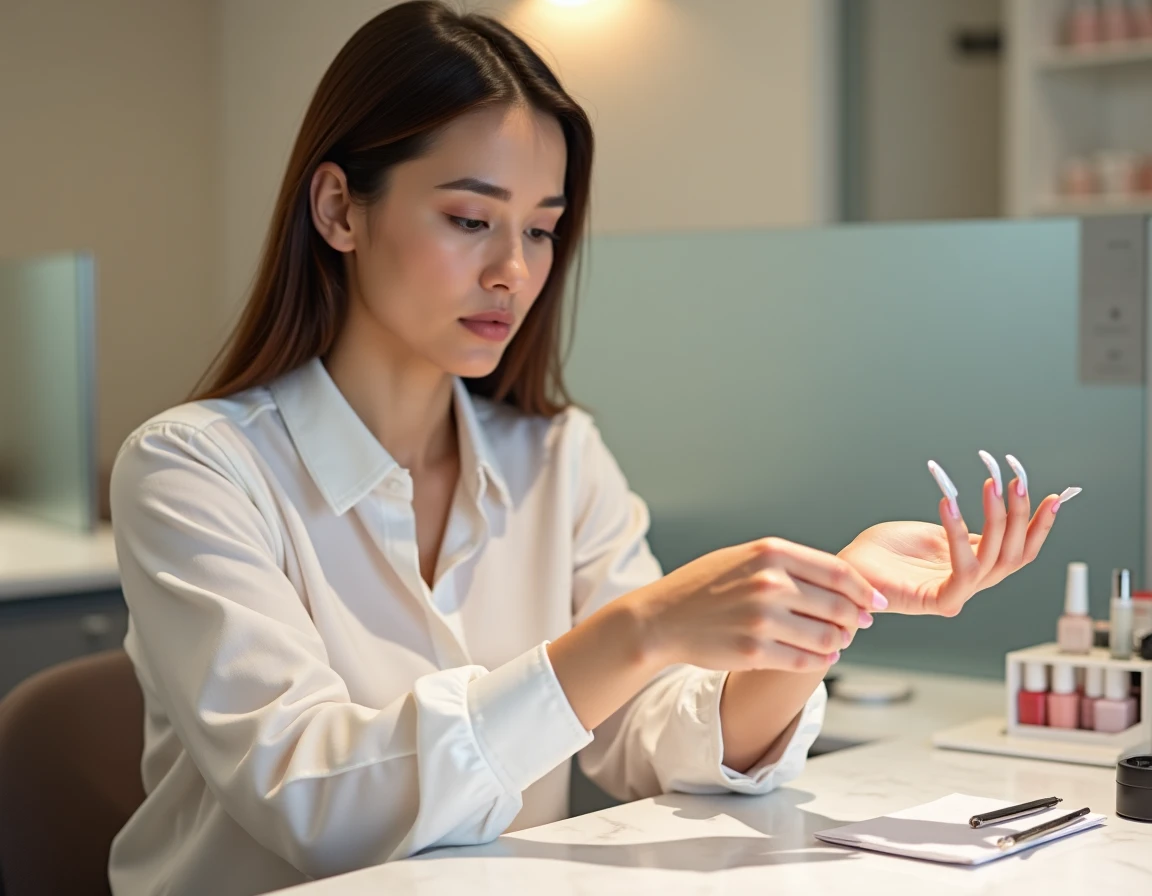
Porcelain nails are based on a mixture of polymer powder and liquid monomer (usually methyl methacrylate or derivatives) that polymerizes in open air. This exothermic reaction produces a hard material, but the residual unpolymerized monomers are the main vector for skin sensitization. We have observed a marked increase in cases of allergies to modeling products over the past few years, making it a priority training focus in salons.
Cross-sensitization to acrylates: a risk that goes beyond the nail
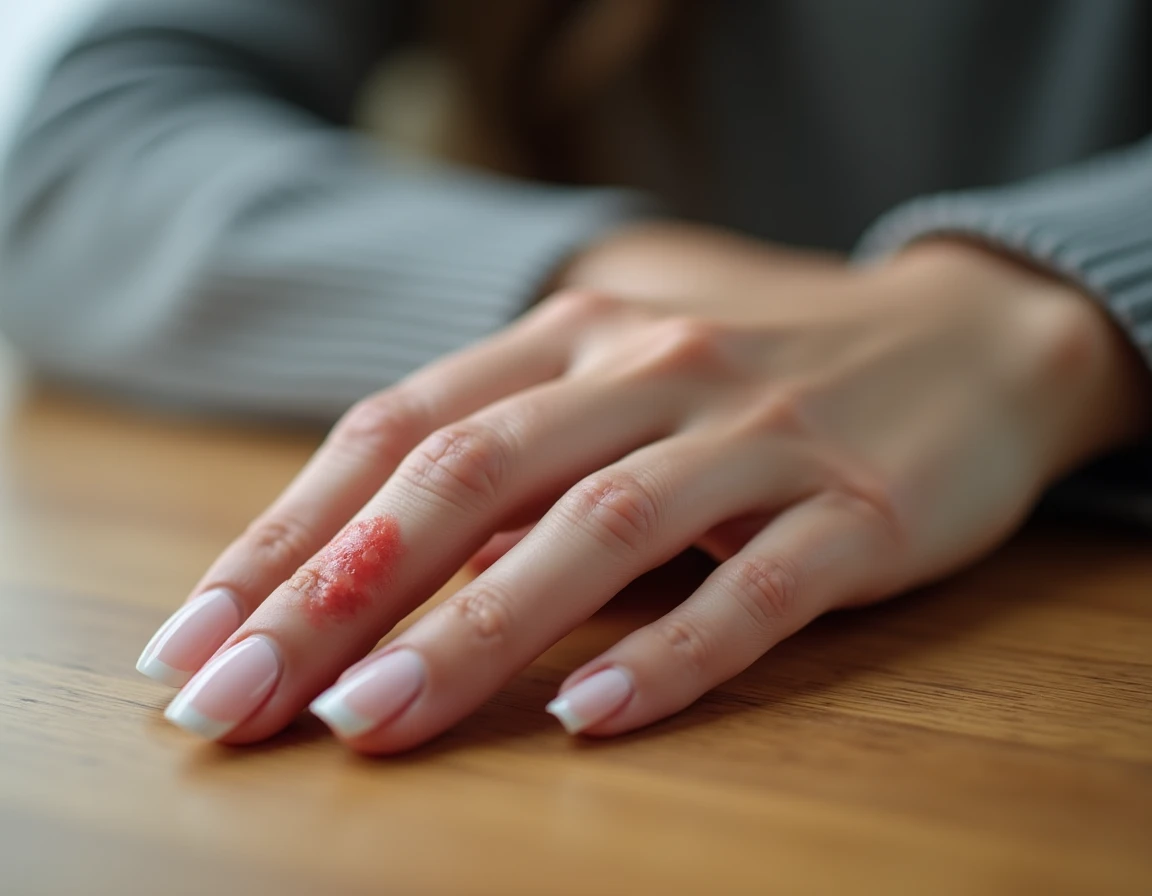
The most underestimated issue with porcelain nails concerns cross-sensitization to acrylates. A person who develops a contact allergy to the monomers used in nail prosthetics may then no longer tolerate acrylates present in other medical contexts: dental composites, surgical adhesives, certain implants.
In practical terms, a client sensitized through repeated applications of porcelain risks being denied restorative dental care or teeth whitening based on acrylates. This locking of future care options is rarely mentioned in consumer content.
Clinical manifestations are not limited to the area around the nail. Documented cases in dermatology report eczema of the hands, eyelids, and face, without visible involvement of the nail plate itself. This discrepancy between the site of exposure and the site of the reaction often delays diagnosis, sometimes by several months. We recommend that any prosthetist confronted with periocular lesions in a regular client should primarily suspect an allergy to (meth)acrylates.
Some protocols discussed in beauty articles on Mes Petites Beautés detail the mechanisms of these reactions and the precautions associated with porcelain application.
Monomers and application protocol: where the allergic risk concentrates
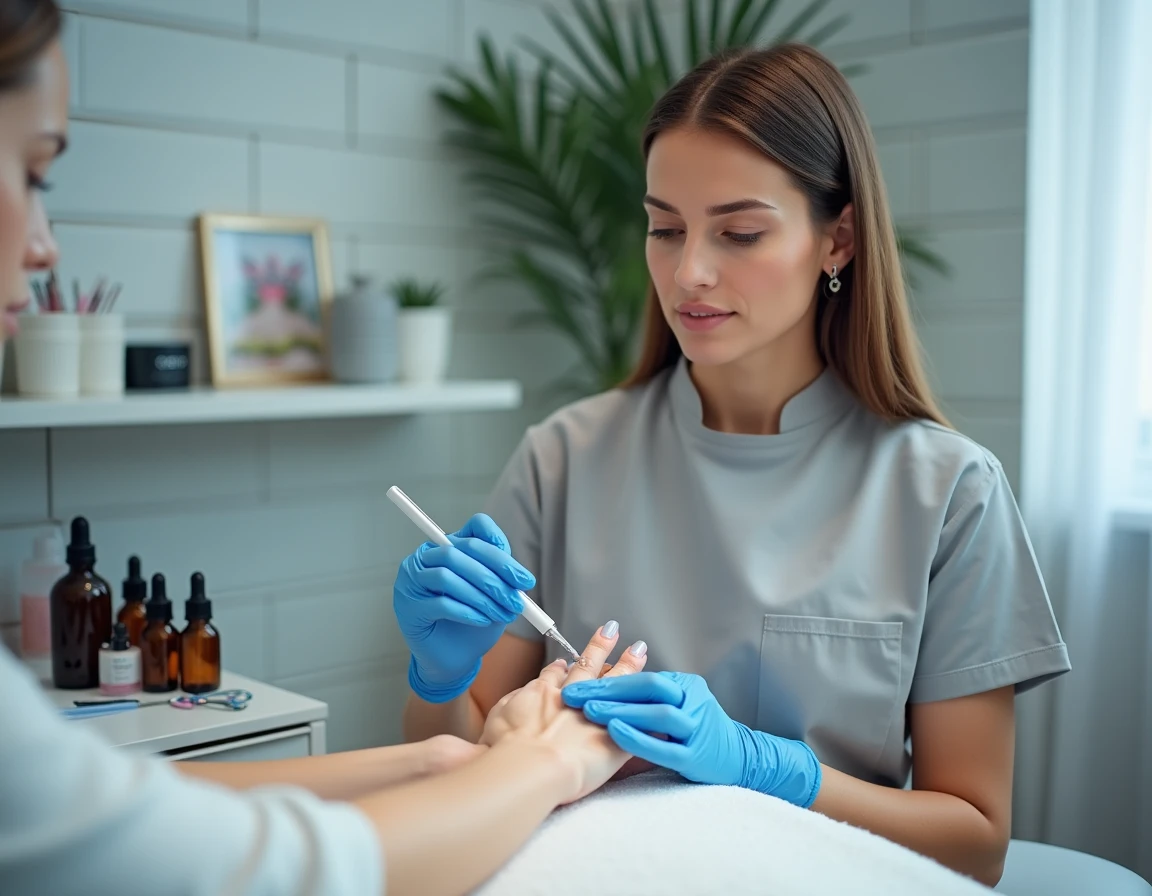
The allergic risk is not evenly distributed throughout the procedure. It concentrates on two specific phases.
Skin contact with the liquid monomer
The unpolymerized monomer is the most allergenic substance in the porcelain system. Any overflow onto the skin or cuticles multiplies the risk of sensitization. Professional protocols require applying the product strictly to the nail plate, without ever touching the periungual tissues. In practice, this margin for error is slim, especially on short nails or unpushed cuticles.
The filing phase and residual dust
The finishing filing generates fine dust containing polymer particles and traces of trapped monomer. Inhaled or deposited on the skin, this dust serves as a sensitization vector for both the client and the prosthetist. Source extraction (dust extraction table) and wearing an FFP2 mask are not comfort options, but direct preventive measures.
The precautions to be taken during the application of porcelain can be summarized in a few non-negotiable gestures:
- Apply the polymer-monomer mixture exclusively on the nail plate, maintaining a safety margin with the cuticles and lateral grooves
- Use a functional dust extraction table and regularly check the suction flow to capture filing dust
- Wear nitrile gloves (never latex, which has its own allergens) and change them between each step of the application
- Ventilate the workspace: insufficient air renewal concentrates monomer vapors in the breathing zone
Acetone removal: a second front of weakening
The removal of porcelain nails relies on prolonged soaking in concentrated acetone. This solvent dissolves the polymer but also attacks the lipids of the nail plate and dries out the periungual skin. Frequent removals weaken the natural nail cumulatively, making it thinner, more brittle, and permeable to pathogens.
We observe that clients who repeatedly apply nails without a rest period present with split, ridged nails, and sometimes partial onycholysis. Spacing applications by several weeks, leaving the nail bare and hydrated, remains the best preservation strategy.
Alternatives to porcelain nails for reactive skin
For clients already sensitized or with an atopic background, traditional porcelain application is contraindicated. Several alternatives significantly reduce exposure to allergenic monomers.
HEMA-free UV gels eliminate hydroxyethyl methacrylate, one of the main sensitizers in gel systems. These formulations do not eliminate all risk but significantly reduce the likelihood of reaction in predisposed individuals.
Short formulation semi-permanent polishes (without formaldehyde, toluene, or formaldehyde resin) offer an acceptable compromise between durability and safety. Their lifespan is shorter than that of porcelain, but removal is done with less acetone and less mechanical aggression.
- HEMA-free gels: a good alternative for clients sensitized to methacrylates, provided the complete composition is checked (some contain other allergenic acrylates)
- “Clean” semi-permanent polishes: durability of two to three weeks, less aggressive removal, compatible with weakened nails
- Acrylic-free press-on capsules: a temporary solution that avoids any prolonged chemical contact, suitable for occasional events
The ANSM advises against the application of artificial nails in certain specific situations: pregnancy, scheduled surgical intervention, or when the natural nail already presents a pathology (fungus, nail psoriasis). These contraindications apply to all techniques, including porcelain.
The choice of a long-lasting manicure technique is not limited to aesthetics or material strength. Compatibility with the client’s immunological profile, the condition of their natural nails, and even their future medical needs for acrylates must be part of the decision. A prosthetist trained in allergic risks will systematically ask these questions before any first application.